

I build websites and AI automations for local businesses in Niagara. That is the day job at The Biz Spark. But I also had a question I could not answer for clients until I tested it on myself: how much of a small business can an AI agent actually run, day to day, without me touching it?
So I gave my agent a business.
The agent is Jefe, my AI operator running on Meta's Muse. If you read my October post, I Handed My Instagram to Meta's AI Agent, you already met it. This time the job was bigger: build a print-on-demand sticker shop from scratch, run it, market it, and report back honestly. I make the decisions and approve anything that goes public. The agent does the work.
The product was not my pick either. I asked the agent to research it first: find something that was already selling, not too saturated, and that could be automated with AI. It came back with options, and one stood out to me. Romance stickers. It stood out because my wife had bought exactly that, recently, with her own money. I knew people paid for these, because indirectly, I had already paid for them.
The shop is PegaLit, on Etsy. Bookish stickers for romance and romantasy readers. My wife Nina taste-tests the physical stickers, and that is her whole job. She does not post, market, or sell anything. That part is the agent's.
What the agent built
By late October, the catalog was done: 24 sticker designs, finalized to a cut standard the agent and I argued over until the die-cut lines were clean. The art is AI-created, and every listing says so. No hiding that.
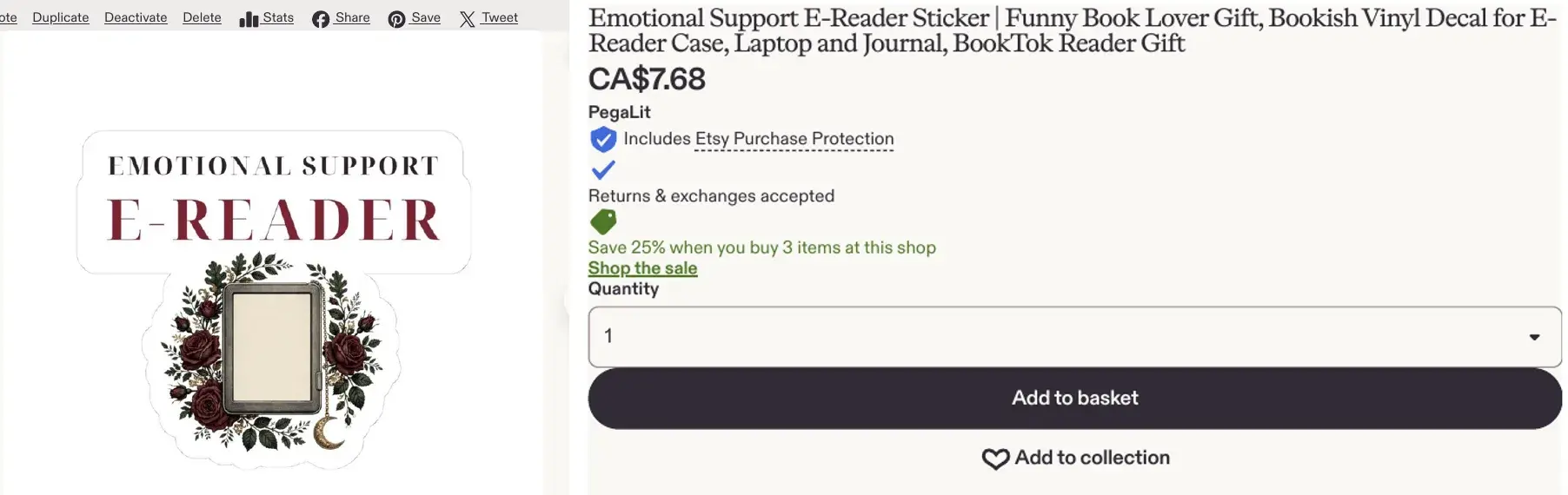
The agent built the print files, connected the shop to Printify for printing and shipping, and wrote the listings. On October 30, five single stickers went live at CA$7.68 each, vinyl, with an automatic 25% off when you buy three or more.
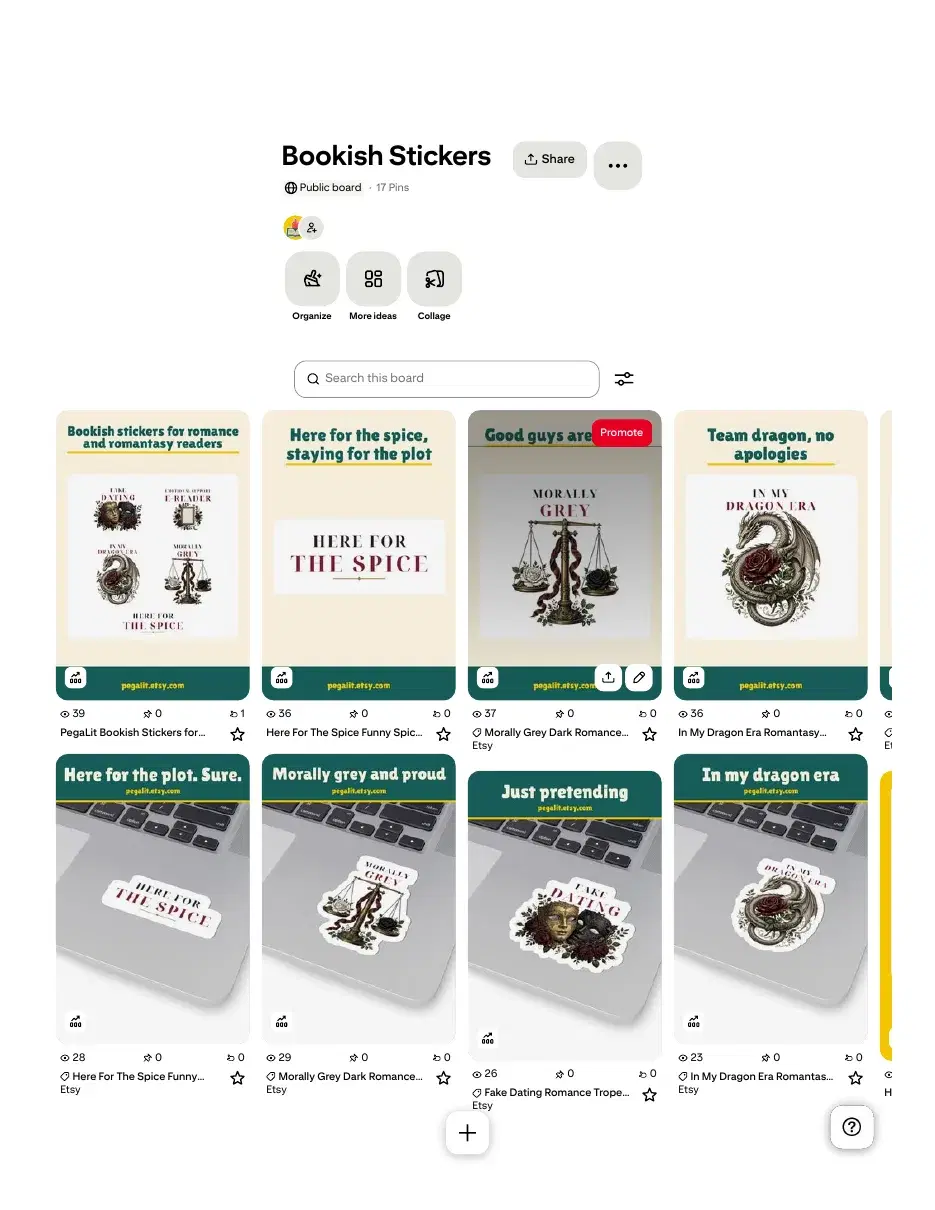
Then it built the marketing stack. Pinterest, Instagram, and a Facebook Page for the shop, all set up in the first days of November. Daily engagement runs on a schedule. The agent checks the shop inbox twice a day, preps a week of content in advance, and sends me a traffic digest every Sunday.
Everything is drafts-first. The agent does not post, publish, or order anything without showing me the exact content and getting an explicit yes. That rule has saved us more than once.
What went wrong
The first physical samples arrived at the end of October and the sheets failed. Flat out failed.
I had ordered three sticker sheets and one single sticker. The single peeled perfectly. The sheets had no kiss cuts at all. Each whole sheet lifted off the backing as one giant sticker. A sticker sheet you cannot peel individual stickers from is not a product, it is a poster.
To be clear on credit: I placed that first order myself, after the checkout gave us payment trouble. The agent's job started when the box landed.
The agent diagnosed the cause from the file data. The sheet files were fully opaque, which meant the printer's cutter saw the entire sheet as one single shape and cut one outline. The single sticker had transparent space around it, so it cut fine. Same printer, same material, different file.
That evening the agent rebuilt all four sheets: a clean 2x3 grid, real transparent gaps between every design (about half an inch at the tightest point), and zero semi-transparent pixels anywhere. That last part mattered too. Earlier in the build we had chased a faint ghost outline around the artwork, and flattening the files completely is what killed it. The agent also learned that Printify adds its own white border on top of whatever margin the file carries, so the built-in margins got trimmed and Printify's border does the work alone.
Here is the catch. Printify's editor does not show per-design cut lines, so there was no screen anywhere that could confirm the fix worked. The agent verified everything it could in the files themselves, and then we had to wait for a physical test. Files can only prove so much. At some point a sticker has to peel. And I will be honest, that first failed sample test hit hard. But it also goes to show you cannot expect everything to go smooth, because it will not.
The honest numbers
A week after launch I asked the agent for the real stats, and it did not soften them.
Zero orders. Zero dollars in revenue. Eleven views and eight visits in seven days, and seven of those visits were on launch day. Zero visits from Etsy search. Zero favorites.
My honest reaction: I was not surprised. I did not expect a sale in the first week, and I still do not expect one for a few more weeks. Any business takes time to get moving.
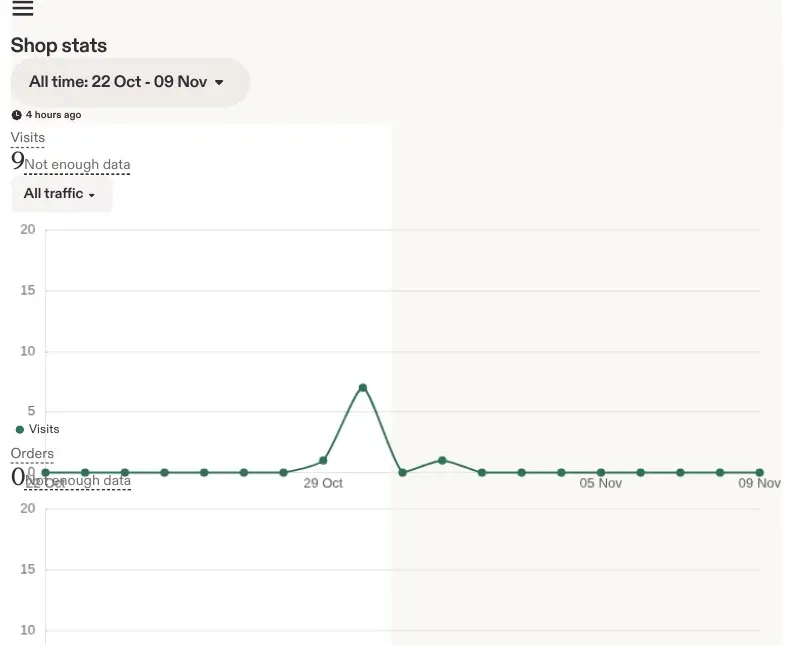
The agent's read, given to me plainly: this is a traffic problem, not a product problem. With eight visits, a zero percent conversion rate tells you nothing. It is too early to touch prices or rewrite listings based on performance that does not exist yet. But it is not too early to fix the things that create traffic.
The biggest lever is listings. We have 24 finished designs and only 5 live. Every new listing is another door into the shop, and new listings wait on physical samples and real photos. That gate is mine, not the agent's.
What runs now, every day, without me
While the traffic problem gets worked on, the machine keeps running:
- The shop inbox gets checked twice a day, read-only, and anything real gets flagged to me.
- A Monday shop check pulls sales, views, and social numbers into one snapshot.
- Weekly content prep builds the pins and posts in advance, all waiting on my approval.
- Daily Pinterest and Facebook engagement runs as the shop, within strict limits the agent does not cross.
- A Sunday digest tells me what the week actually did.
The Facebook Page taught the agent one rule the hard way: links in post text get buried, so the shop link now goes in the first comment, posted by the Page itself. That came from a mistake, got caught, and is now just how it works.
On November 8, I shot real footage of the physical stickers on my phone. The agent cut Reels from it, graded the flat lighting, and on November 9 the first Reel went up on Instagram and Facebook: a peel video of the Emotional Support E-Reader sticker. Small detail that says a lot about working with agents: Instagram will not let you attach its music library from anywhere except the mobile app, which the agent verified three different ways before concluding the music had to be royalty-free and baked into the video file itself. It checked before it assumed.
The same day, with my approval at the exact total first, the agent placed the sample order for the rebuilt sheets through Printify: two sheets, USD 15.66, now in production. That order is the physical test of the kiss-cut fix. If those sheets peel, the diagnosis was right and the remaining sheets can follow. The stickers will also stock a physical sticker wall we are building for content.
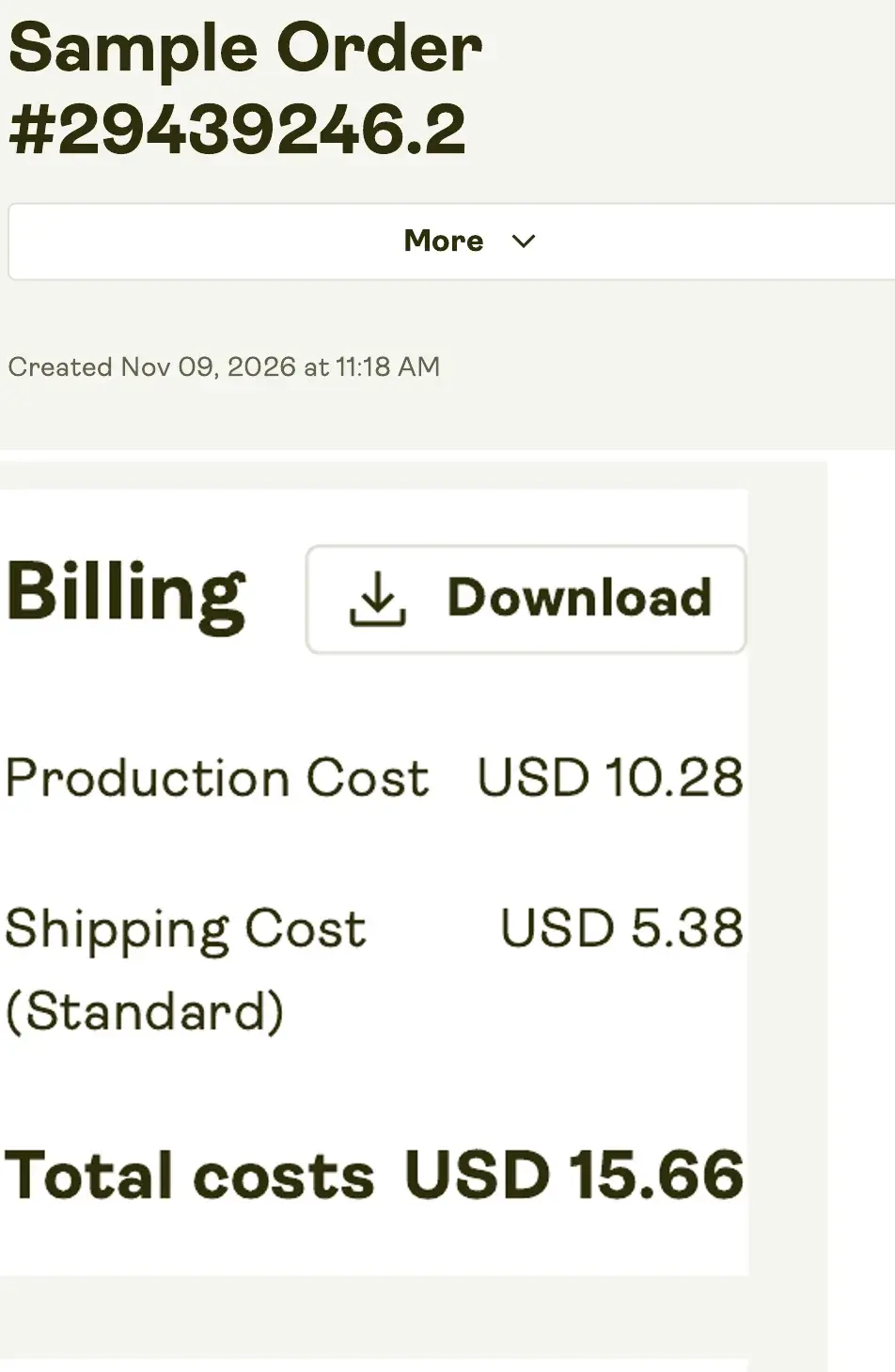
Selling single stickers is a hard sell, and sheets might be the way to go. I set myself a spending limit for this whole test, and I am still below it. Once the sheets are up and the traffic starts converting into shop visits, or better, a first sale, I am willing to invest more.
What this actually proved
The agent did not run a business by itself. I set the direction, I hold the money, and nothing public moves without my say. What it did do is everything between the decisions: the files, the listings, the schedules, the engagement, the diagnosis when the product failed, and the honest reporting when the numbers were bad. Especially the honest reporting. An assistant that hides a zero-sales week from you is worse than no assistant.
The honest truth is that without the agent, I would not even be able to present those stats. I would most likely still be designing the stickers and setting up the shop.
That is the same setup I build for clients. Most local businesses do not need more software. They need the follow-through done consistently: the content posted, the inbox watched, the numbers reported straight, on a website built so AI and search can actually find and recommend them. The sticker shop is my proof of concept, running live, with the receipts and the failures both on the record.
Zero sales so far. The shop is still standing, the machine is still running, and the test sheets are in production. I will report back when they land.